Current service state, from the source that owns it.
Check current Zoiko Tech service availability and incident communications. Every live state shows when it was last confirmed. If current status can't be verified, this page says so instead of assuming normal operation.
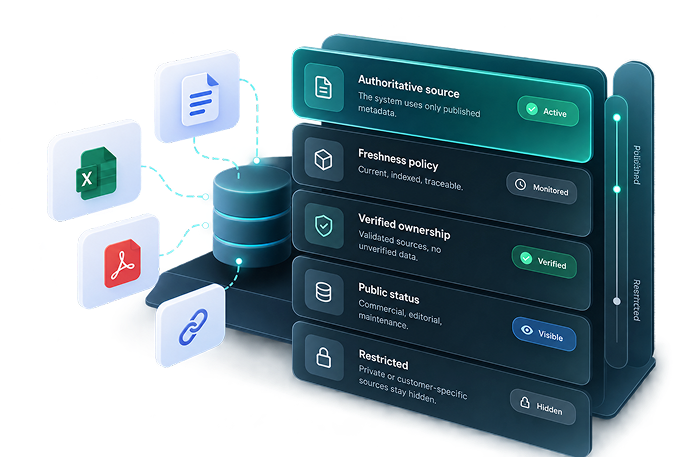
Freshness and source authority
How we decide what to show, and what to do when we can't be sure.
Every snapshot carries
Freshness presentation rules

Fresh and verified
Render the approved source state plus "Last updated ...".

Source delayed beyond threshold
Show a delayed-data banner. Last-known state only under approved policy, with explicit age.

Source unavailable
No current operational claim. Show "current status unavailable" with retry and support.

Partial source failure
Mark the affected scope unknown or unavailable. Never infer from neighboring components.
Conflicting sources
Show "unable to confirm" or conflicting status, with internal escalation. Never choose the reassuring value.
Clock / timezone ambiguity
Use an absolute timestamp with timezone. Relative time is secondary.
Active incidents
Only verified, approved active records appear here, ordered by the source's own priority field, never by marketing importance.
Public title
Approved plain-language title. No internal ticket title.
Source state
Exact approved lifecycle label. The renderer never invents severity or state.
Affected scope
Public component, service or region only if the source provides it and disclosure is approved.
Impact summary
What users may observe, bounded to approved facts. No speculative root cause.
Started / detected
Authoritative incident timestamp with timezone.
Next update
Only if the source explicitly commits to one. Otherwise omitted.
ETA
Only when supplied by the authoritative incident source. Never estimated by the frontend.
Support action
Contextual Help & Support when useful. Incident content is never hidden behind support.
Component and service status
The Status Component Registry owns the public grouping. Product marketing cards are never a substitute.

public_label
Approved customer-facing component or service name.

group_label
Optional source-defined grouping. No designer-created architecture categories.
current_state
Exact source state or an approved normalized mapping.
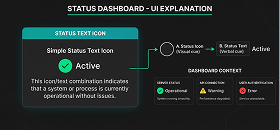
status_text
Plain-language explanation where the source supports it.

source_updated_at
Last authoritative update time for this component.
active_incident_ids
Links to incident records affecting the component.
maintenance_ids
Links to current or upcoming maintenance, where the source supports association.
region / market
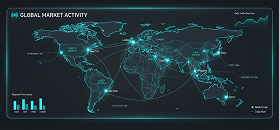
Only when the status is legitimately scoped by the source and safe to disclose.
Planned maintenance
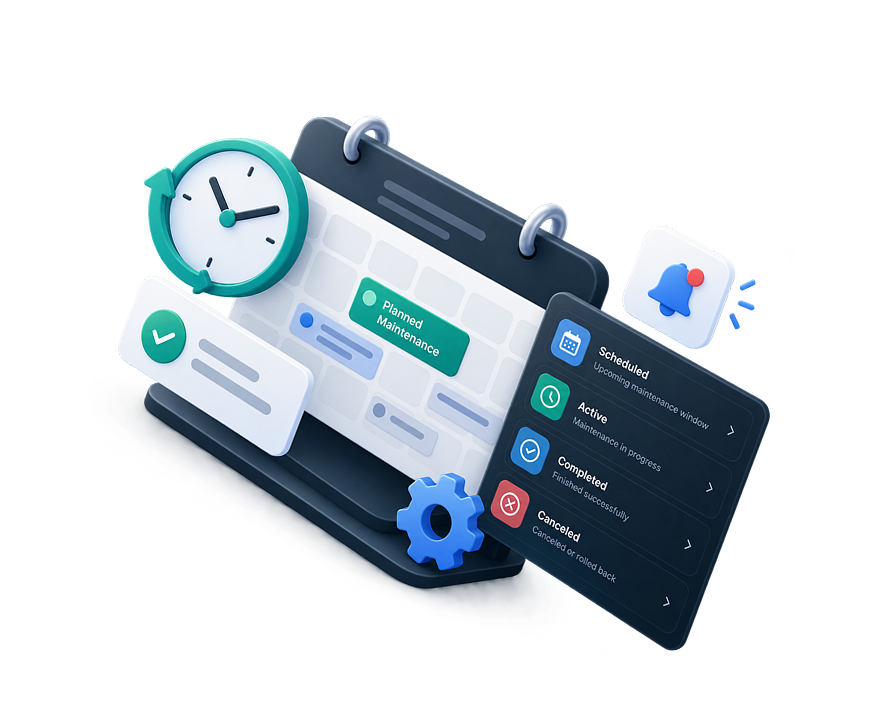
Upcoming maintenance is not an outage unless the source says impact is active.
State
Scheduled, active, completed or canceled, only if the source vocabulary defines them.
Window
Absolute start and end timestamps with timezone. Local display can supplement but not replace.
Affected scope
Only the source-defined public component, region or service.
Expected impact
Only a source-approved statement. No inferred downtime.
Actual impact
If the source publishes it, kept separate from expected impact.
Updates
Schedule changes, cancellation or extension stay timestamped.
Incident detail
What every incident page contains.

Header
Incident title, source state, affected scope, start time and latest update time.

Current impact
Latest approved user-impact summary, distinguishing confirmed from unknown where the source supports it.

Timeline
Chronological public updates with timestamp, source state and a sanitized message.

Affected components
Links to public component rows. The internal dependency graph is never exposed.
Incident history, corrections and restatements
Comprehensive guidelines for historical archiving, tracking status updates, corrections, and public accountability records.
Resolved incidents
Source-confirmed closure only. Start, end and final public summary are kept.
Date filtering
Calendar, month or year filters only if history volume justifies it. URLs stay stable and shareable.
Component filtering
Uses the same public Status Component Registry and historical mapping.
Search
Indexes public title, summary and update text. Never internal or private incident metadata.
Correction / restatement
Shows the correction date and a concise reason when approved, preserving public auditability.
Post-incident review
A conditional public artifact only when approved. Not every incident has an RCA.
Retention
Follows the approved public history policy. Nothing is deleted just to look more reliable.
Supersession
If a record is merged, split or corrected, canonical links and current record mapping are preserved.

Availability metrics and the SLA boundary
Historical availability is not a contractual SLA. Contract terms live in the applicable agreement.
Metric definition
Numerator, denominator, excluded states and aggregation method.
Scope and period
Exact product, component, region or deployment, with an explicit date range and timezone.
Data source
Approved source and methodology owner.
Finality
Whether the period is final, provisional or corrected.
Visualization
Text value plus an accessible table. A chart is optional and must preserve exact values.
Missing data
Shown as unavailable or insufficient data. Never interpolated silently.
Status subscriptions and notifications
Guidelines and design contracts for managing user alerts, communication channels, and secure notification preferences.
Channels
Only source-supported channels are shown. Email, SMS, webhook, RSS or app notifications are never invented.
Scope selection
Component, incident or category selection only when the source supports it.
Purpose
Operational notifications only, separate from marketing consent.
Consent
Explicit, channel-specific consent and a privacy notice where required.
Verification
Provider or source verification flow only when supported.
Unsubscribe
Easy, reliable and channel-appropriate. No login unless technically necessary and approved.
Data minimization
Minimum contact information. No account or customer enrichment for marketing.
Security
Tokens and verification values never enter analytics, unsafe URLs, logs or public UI.
Trust, support, documentation and developer boundaries
Where Status ends and the next destination begins.

Trust Center
Security, privacy, compliance, accessibility and resilience evidence.

Responsible Disclosure / Security
Route vulnerability and security reporting, and approved security disclosures.

Help & Support
Account and workflow troubleshooting and case creation.

Documentation
Product behavior, recovery instructions and known workflows where approved.

Developer Resources
APIs, SDKs, integration status context and developer support.

Release notes / changelog
Explains shipped product changes.

Product / Technology pages
May link to Status for availability concerns.
Currentness, error and edge states
What the page does when something isn't perfect, and it never defaults to green.
Fresh / normal source
Source-backed state and last updated time.
Active incident
Incident summary sits above the component list, with the current update prominent.
Maintenance active
A separate maintenance indicator and approved impact. Not labeled an incident unless the source does.
No active incidents verified
Said only when the source is reachable and confirms zero.
Source delayed
A visible delayed-data banner with the last successful confirmation. No silent "current" label.
Source unavailable
"Current status unavailable," with retry and support. No default operational state.
Conflicting source data
"Unable to confirm" with internal escalation. No automatic resolution.
Incident record unavailable
A safe error, list and navigation kept. We never infer the incident is resolved.
Common questions
Answers here follow the same verified snapshot and freshness policy as the page. Where a live answer is needed, this page can't give it without a connected source.
Answered only from a verified current snapshot inside the freshness policy. If that isn't available, we say current status can't be confirmed and direct you to the live status surface.