
GUIDES & REPORTS
Practical resources
worth reading
before you download.
Explore structured guides and reports designed to help teams evaluate, implement and operate complex technology and business systems. Every published resource should make its purpose, scope, currentness, sources and access state clear — without thin teaser pages or invented proof.

What do you need to understand?
Reading and evaluation come before conversion.

Learn a complex topic
Structured explanation, purpose and audience before evaluating options.

Evaluate an approach
Source-aware tradeoffs, decision criteria and currentness.

Prepare implementation
Practical readiness guidance; exact product behavior remains in canonical documentation.

Prepare procurement
Requirements, evidence and Trust context.

Find technical evidence
Technical papers and benchmarks belong to Research.

Discuss an evaluation
Bring a qualified question after reviewing the resource context.
Find the right resource.
Only published metadata can populate discovery controls.

Search
Approved titles, summaries, topics, audiences and public keywords. Exclude drafts and controlled files.

Facets
Guide, Report and registry-defined other types; topic, audience, related technology and industry only when metadata exists.

Sort & clear
Relevance, newest, recently reviewed or A–Z. Announce changes and preserve focus.

Prototype state
Catalog unavailable: approved inventory and registry were not supplied. No fake search results or filter options.

Featured resources need current
evidence.
A real resource, not a decorative report cover.

Eligibility
Approved current resource with complete content, ownership, source and access metadata.

No eligible feature supplied
Featured resources are omitted. No invented title, author, date, page count or download statistic.

Freshness
Superseded, stale or withdrawn resources do not remain featured.
05 / GUIDES & REPORTS
The resource library.
Real artifacts and meaningful web content control publication.
Resource catalog unavailable.
This local prototype is not connected to the governed resource registry. No approved guide/report inventory or download files were supplied. This does not establish that no resources exist.
Publication cards and downloads will appear only when their content, source, currentness and access state are verified.
Explore the Research preview →Understand a resource before
opening it.
Discovery cards preserve purpose, scope and access.

Identity & purpose
Exact approved title, type, meaningful summary, task or decision supported and audience.
Ownership & currentness
Public-safe owner/reviewer, publication/review date, version and supersession state.

Access & artifact
Open, gated, controlled or unavailable. File format, size and page count only when verified.

Reading value comes first.
A title, cover and form are not a substantive resource.
Meaningful web content
Standalone summary/body or substantial preview, structured headings and practical takeaways.
Source & limitations
Material claims, assumptions, method and currentness remain visible.
Optional format
Download supports the reading experience; it is not the only route to essential information.
A download button is a promise.
No placeholder file, guessed format or broken delivery path.

Verify the artifact
Real approved file; title, version and metadata match the resource.


Verify accessibility
Accessible-document QA, scanning and approved hosting before release.

Preserve web value
Remove unhealthy downloads while keeping meaningful web content available.
A guide supports a task or decision.
Useful steps, dependencies and review points.

Goal & audience
Define the problem, intended reader and prerequisites.
Structured guidance
Approved steps, alternatives, decision gates and practical verification; editorial guidance is not automated product behavior.
Source & currentness
Authoritative docs/trust/research references and reviewed version; synthetic examples labeled explicitly.

A report explains its question and
method.
Source-backed findings retain their scope and limitations.

Purpose & scope
Question, period, domain and applicable audience or geography.

Method & evidence
Sources, population and assumptions for data-led or comparative analysis.

Findings & limits
No invented surveys or analyst conclusions. Charts require accessible equivalents, units, dates and source context.
Every material claim needs a source.
Editorial resources do not replace authoritative product or trust evidence.
Claim-source mapping
Approved external or governed internal evidence; accurate third-party attribution.
Statistics & method
No naked numbers. Preserve denominator, units, period, scope and assumptions.
Product & Trust boundaries
Current features defer to product/docs sources; assurance defers to Trust Center. Corrections re-review dependent claims.

Version & currentness
Show the reviewed version, effective date and freshness of evidence before citing it.

Review status
Mark whether a claim is approved, pending review or superseded, with ownership visible.

Corrections & updates
Changes, clarifications and withdrawn claims should remain traceable and easy to review.
Accountability without invented
authority.
Owners and reviewers are real governed roles.
Editorial owner
Accountable internal content owner; named attribution only when approved.
Subject-matter review
Approved name/title or public-safe role; no fabricated expert badge.
Applicable review
Legal, security, privacy and product review only where required and actually completed.

Editorial owner

Subject-matter review

Applicable review

Governance
Know whether guidance is still
current.
Versions and states remain distinguishable.
Published / updated
Approved initial publication and substantive changes, with history where policy requires.
Superseded / archived
Current replacement prominent; historical state explicit and removed from featured prominence.
Withdrawn / unknown
No ready-to-download or current label. Unknown metadata fails closed; do not guess.
Access requirements should be
clear.
Value-proportionate access with separate, optional marketing consent.

Open by default where practical
Web-readable value and open download without unnecessary forms.

Approved access models
Optional contact, justified high-value gate, customer-only or controlled request only under a governed policy.

Privacy & form recovery
Collect only routing-required fields. Explain use; preserve entered data on failure. Marketing service failure must not block all reading value.
Continue from learning to
evaluation.
Related resources follow approved topic, audience and currentness.

Executive / procurement
Summary → sources/currentness → technology or trust context → qualified discussion.
Technical implementation
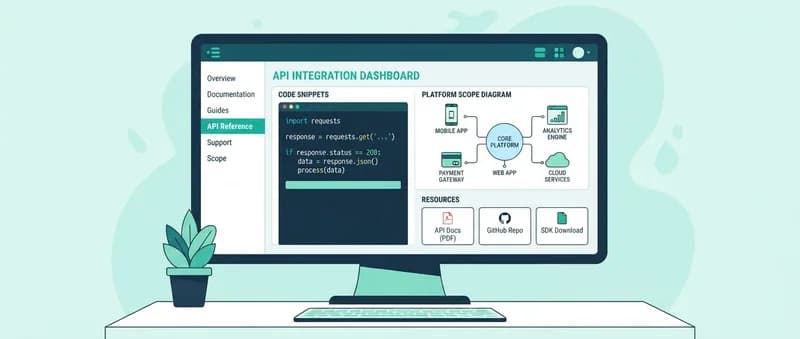
Guide → exact Documentation/Developer Resources → supported platform scope.

Research / returning reader
Technical evidence routes to Research. Saved historical links point to updates or current replacements.
Editorial guidance and canonical
docs stay separate.
Configuration, exact APIs and product behavior belong in authoritative implementation destinations.

Documentation
Current product/platform specifications and supported behavior.
Developer Resources
Actual APIs, SDKs, tools and integration guidance when public-ready.
No inferred releases
A guide does not create a repository, endpoint or generally available capability.
Technical evidence and assurance
have owners.
Research and Trust Center remain distinct from Guides & Reports.
Research
Technical papers, benchmarks and research outputs.
Trust Center
Authoritative security, privacy, compliance, accessibility and resilience evidence.
Publish through a governed registry.
Approved content, download health and access policy must agree.

Resource record
Identity, summary, purpose, audience/topic, canonical route, state, owner, sources, version and approval.

Artifact & gating records
Actual assets, formats, version, health/accessibility and explicit access policy.

Release gates
Substance, sources, ownership, web readability, download QA, privacy, canonical/SEO, accessibility and safe analytics.
Recover honestly when something
changes.
Unavailable is not the same as empty, and stale is not current.
No match / empty / unavailable
Distinct explanations; clear filters or authoritative recovery, without fabricating resources.
Broken file / form provider
Remove broken download; retain web value and approved retry/request path.

Restricted / historical
Respect access rules, supersession and withdrawal. No-JavaScript reading stays usable when real content exists.
Clear answers before downloading.
Purpose, currentness, access and format should be understandable.
- What are Guides & Reports?

- Are all resources downloadable?
- Must I submit a form?
- Are reports research papers?
- Does a guide prove a live product feature?
- How do I know it is current?
- What if the resource has been replaced?

Continue with a qualified question.
Connect learning to your evaluation, implementation or procurement context.
Reading value first.
No resource identifier is passed because the approved catalog was not supplied. Describe your objective at a high level.
Explore Customer Stories preview →