




Inclusive service
design
Plain language, necessary information and clear instructions help people understand the next step.
Zoiko Tech supports public-sector technology across digital infrastructure, identity, governed AI, communications, data and public-service workflows — with accessibility, jurisdiction, authority and evidence treated as part of the operating architecture.
Explore trust architecture →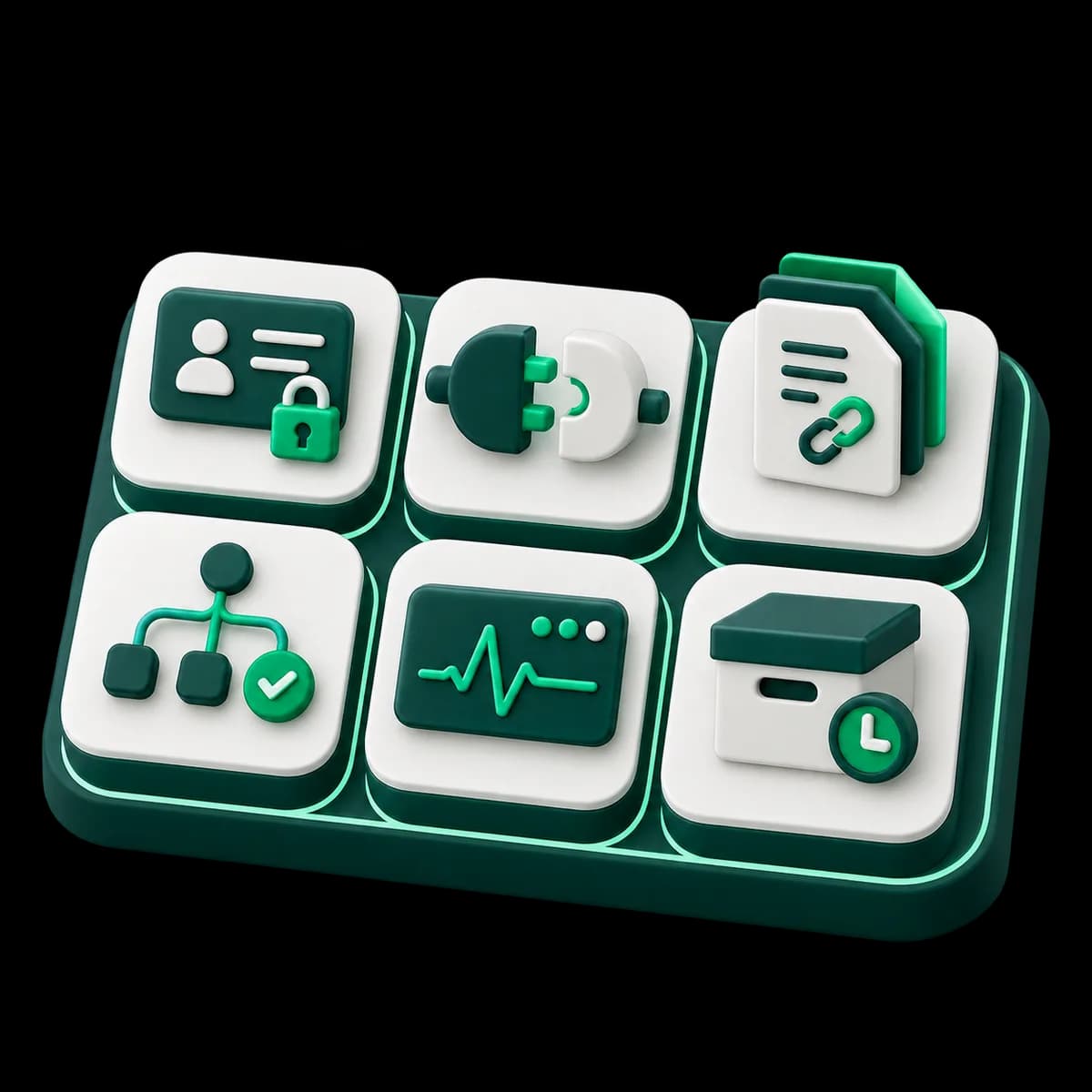
PUBLIC DIGITAL-SERVICE FOUNDATIONS
Accessible channel → Authority → Workflow → Evidence
Choose a service objective to explore its architecture, controls and evaluation path.

Accessible, understandable journeys with explicit
status and support.

Identity, authentication and revocable delegated
authority.

Requests, approvals, exceptions and
accountable handoffs.

Source-aware assistance with human authority
and review.

Approved notifications connected to service
workflows.

Connect systems through interfaces, data and
observability.
Four operating challenges guide the design of accessible, auditable digital services.

Disability, language, device and
assisted-service needs must be
considered in service design.

Residents, staff, vendors and
systems may need different
identity and delegation controls.

Requests and approvals cross
systems without a clear owner or
record.

Long-lived systems and agency
boundaries need deliberate
integration.

Keep user-facing services, agency operations and authoritative systems connected without blurring their
responsibilities.
Resident, business, employee, vendor or service operator at minimum necessary scope.
Who is using the service?Agency, program, locality and policy context from authoritative sources.
Which authority and rules apply?Supported authentication, authorization and representative authority.
Who may act?Request, application, task or review at an architecture level.
What work is performed?System of record, official source, effective period and reviewed rules.
What is authoritative?Approval, exceptions, notifications, evidence and support.
How is it governed and explained?Interfaces, observability, status and downstream handoffs.
Can agencies operate it reliably?Design toward WCAG 2.2 AA with visible focus, readable content and usable primary controls. Accessibility
compliance requires testing and review.

Plain language, necessary information and clear instructions help people understand the next step.

Consider human help and alternate channels where the responsible program supports them.


Keyboard access, semantic structure, clear errors and manageable cognitive load belong in acceptance criteria.
A person, official, representative or integration should carry only the authority supported by the service and
product.
Coordinate generic service requests, tasks and reviews across teams while preserving source records and
decision boundaries.
3 specimen requests
| Reference | Service | State | Owner | Next action |
|---|---|---|---|---|
| PS-001 | Sample information request | Under review | Service team | Review source information |
| PS-002 | Sample document request | Needs information | Operations owner | Request missing item |
| PS-003 | Sample service handoff | Blocked | Integration team | Confirm receiving-system status |
Responsible AI connects governance, human oversight, evaluation and accountable deployment.
Summarize and suggest from approved sources. An authorized human or system decides.
Draft communications or
evidence packages before
material action.
Supported tools, explicit approval and a bounded action scope.

Approved low-risk scope
with monitoring and retained
evidence.

Connect service updates to approved channels, permissions and responsible-service support.

Status, required information, deadlines or
appointments where supported.

Respect user preferences and applicable
program rules.


Sent, delivered, failed and unknown remain
distinct when channel evidence supports
them.
Data use should be understandable, necessary for its purpose and linked to the owning source.

Owning agency or system,
effective time and any
transformation.

Reviewed service scope,
necessary information and
approved retention.

Connect secure engineering, privacy-conscious data use, least privilege and reliable operations.
Corporate and product-
specific security evidence.
Explicit role and scope around
public-service actions.

Minimum necessary data for
an approved service and role.
Observability, incident
communication and
supported recovery paths.
Policy, ownership, review and evidence belong alongside the work they govern.

Authoritative source, effective period, scope
and accountable owner.

Actor, authority, source evidence, result and
timestamp.

Reason, authority, expiry, review and
supporting evidence.
Product names do not substitute for maturity, operator, deployment or evidence records. States below
reflect the supplied wireframe.

Secure access, identity, and assurance for public-sector teams.
A fitting editorial image that supports the section without adding unwanted detail.

Secure access patterns for public-sector use cases.
Digital identity evidence for supported methods.
Assurance and regulatory evidence for approved scope.
APIs, SDKs, and ecosystem services for approved destinations.
Intelligence and knowledge with responsible AI governance.
Adjacent scenarios for approved communication use cases.
Keep authoritative sources, identity, interface health and support ownership visible.
Approved APIs, SDKs, model
interfaces, events and
authentication.
Documentation, API
references,
quickstarts and architecture
guides.
External sandbox access only
when it is live and approved.
Supported observability,
usage,
status, changelog and
assistance.
Choose a bounded modernization path that preserves authoritative systems and service responsibilities.
Agency, users, jurisdiction, policy owner and outcome.
Gate: Scope approved
Authoritative systems, sources and integration boundaries.
Gate: Architecture map approved
Access, privacy, security, authority and support requirements.
Gate: Control design approved
Coexist, integrate, modernize or migrate where justified.
Gate: Architecture decision approved
Access, errors, missing data, review, outages and recovery.
Gate: Acceptance criteria met
Bounded service and jurisdiction with controlled data.
Gate: Pilot reviewed
Support, status, evidence and change-control ownership.
Gate: Operational readiness approved
Evaluate barriers, exceptions, incidents and evidence.
Gate: Expansion approved
Approved agency stories and measured outcomes were not supplied. Explore the architecture while
evidence is pending.
Access problem → integration → accessible workflow → approved result.
Delegation problem → authorization design →approved operational result.
Fragmented process → governed handoff →approved outcome.
Bounded use → evaluation → human oversight→ monitored limitations.

Agency identity, service details, environments and measured results require explicit publication approval.


Use only when legal, customer and relevant
public-affairs approvals permit it.

Actual technology, operator and environment at approved scope.


Only measured, evidenced outcomes with exact assurance wording.
Explore adjacent architecture pathways as needs expand.

Shared infrastructure, interfaces
and system boundaries.

Delegation, security and
accountable authority.

Source-aware assistance and
responsible deployment.

Reviewed rules, controls and
retained history.

Approved channels and
supported assisted pathways.

Requests, owners, exceptions
and handoffs.

Talk with Zoiko Tech about the service or operational workflow, jurisdictions and systems involved, and the
integration path that fits your environment.
Define the responsible authority, the source systems and the
requirements for access, identity, security and evidence.
Users, accessibility and assisted-service needsAgency, jurisdiction and deployment contextAuthority, source records and review requirementsZoiko Tech supports public-sector technology across
digital infrastructure, identity, governed AI,
communications, data and public-service workflows
— with accessibility, jurisdiction, authority and
evidence treated as part of the operating
architecture.
Accessible by design. Authority-aware. Evidence-led. Jurisdiction-conscious.
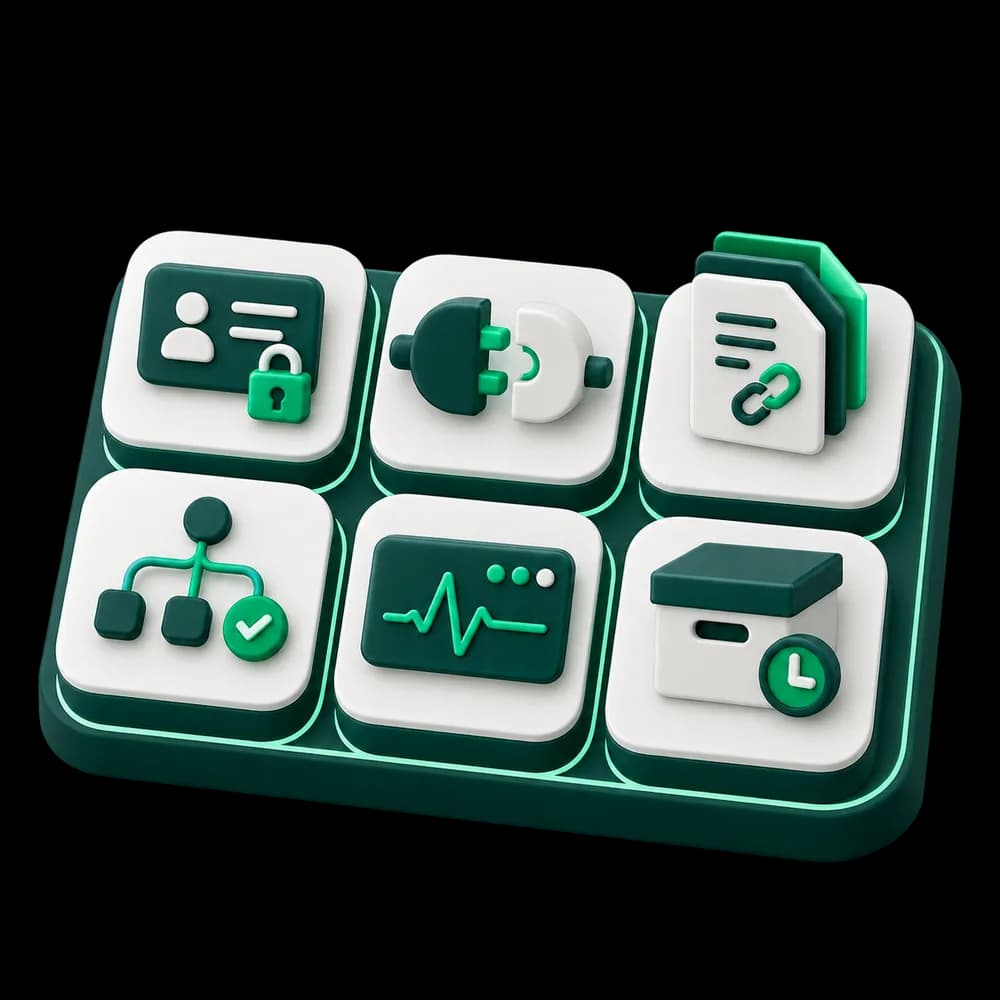
Accessible channel → Authority → Workflow →
Evidence
Choose a service objective to explore its architecture, controls and evaluation path.

Accessible, understandable journeys with explicit status and support.
Explore pathway
Identity, authentication and revocable delegated authority.
Explore pathway
Requests, approvals, exceptions and accountable handoffs.
Explore pathway
Source-aware assistance with human authority and review.
Explore pathway
Approved notifications connected to service workflows.
Explore pathway
Connect systems through interfaces, data and observability.
Explore pathwayFour operating challenges guide the design of accessible, auditable digital services.
Disability, language, device and assisted-service needs must be considered in service design.
Explore pathway
Residents, staff, vendors and systems may need different identity and delegation controls.
Explore pathway
Requests and approvals cross systems without a clear owner or record.
Explore pathway
Long-lived systems and agency boundaries need deliberate integration.
Explore pathwayKeep user-facing services, agency operations and authoritative systems connected without blurring
their responsibilities.
Resident, business, employee, vendor or service operator at minimum necessary scope.
Who is using the service?Agency, program, locality and policy context from authoritative sources.
Which authority and rules apply?Supported authentication, authorization and representative authority.
Who may act?Request, application, task or review at an architecture level.
What work is performed?System of record, official source, effective period and reviewed rules.
What is authoritative?Approval, exceptions, notifications, evidence and support.
How is it governed and explained?Interfaces, observability, status and downstream handoffs.
Can agencies operate it reliably?Design toward WCAG 2.2 AA with visible focus, readable content and usable primary controls.
Accessibility compliance requires testing and review.
Plain language, necessary information and clear instructions help people understand the next step.

Consider human help and alternate channels where the responsible program supports them.


Keyboard access, semantic structure, clear errors and manageable cognitive load belong in acceptance criteria.
A person, official, representative or integration should carry only the authority supported by the
service and product.
Identity, organization and assignment at supported scope.
Explore pathwayExplicit scope, effective period and revocation where supported.
Explore pathway
External organization and contract scope remain clear.
Explore pathwayMachine-to-machine identity where supported.
Explore pathwayCoordinate generic service requests, tasks and reviews across teams while preserving source
records and decision boundaries.
3 specimen requests
| Reference | Service | State | Owner | Next action |
|---|---|---|---|---|
| PS-001 | Sample information request | Under review | Service team | Review source information |
| PS-002 | Sample document request | Needs information | Operations owner | Request missing item |
| PS-003 | Sample service handoff | Blocked | Integration team | Confirm receiving-system status |
Workflow completion does not establish eligibility, entitlement, a permit or any other official determination.
07 / GOVERNED AI IN PUBLIC SERVICES
Responsible AI connects governance, human oversight, evaluation and accountable deployment.
Summarize and suggest from approved sources. An authorized human or system decides.
Explore pathwayDraft communications or evidence packages before material action.
Explore pathwaySupported tools, explicit approval and a bounded action scope.
Explore pathway
Approved low-risk scope with monitoring and retained evidence.
Explore pathway
No autonomous benefits, eligibility, enforcement or other high-impact public decisions are depicted or claimed.
08 / COMMUNICATIONS & NOTIFICATIONS
Connect service updates to approved channels, permissions and responsible-service support.
Status, required information, deadlines or appointments where supported.
Explore pathwayRespect user preferences and applicable program rules.
Explore pathway
Sent, delivered, failed and unknown remain distinct when channel evidence supports them.
Explore pathway09 / DATA, PROVENANCE & JURISDICTION
Data use should be understandable, necessary for its purpose and linked to the owning source.

Owning agency or system, effective time and any transformation.
Explore pathway
Reviewed service scope, necessary information and approved retention.
Explore pathwayDeployment, residency and sovereignty assurances require exact evidence. No sovereign-cloud or in-country hosting claim is made.
10 / SECURITY, PRIVACY & RESILIENCE
Connect secure engineering, privacy-conscious data use, least privilege and reliable operations.
Corporate and product-specific security evidence.
Explore pathwayExplicit role and scope around public-service actions.
Explore pathway
Minimum necessary data for an approved service and role.
Explore pathwayObservability, incident communication and supported recovery paths.
Explore pathwayCertifications, government authorization, procurement status and deployment assurances are not established by this prototype.
11 / EVIDENCE, AUDIT & REGULATORY CONTROLS
Policy, ownership, review and evidence belong alongside the work they govern.
Authoritative source, effective period, scope and accountable owner.
Explore pathwayActor, authority, source evidence, result and timestamp.
Explore pathwayReason, authority, expiry, review and supporting evidence.
Explore pathwayClaim wording must match its evidence: Certified / Attested · Compliant only where legally verified · Aligned / Designed to · Roadmap / Target.
12 / PLATFORM & TECHNOLOGY EVIDENCE
Product names do not substitute for maturity, operator, deployment or evidence records. States below reflect the supplied wireframe.
Industry solution when ready.
Digital identity and access technology evidence when ready.
Assurance and regulatory technology evidence when ready.
APIs, SDKs, tooling and ecosystem services when ready.
Intelligence, agents and knowledge with Responsible AI governance.
Zoiko Sema / Zoiko Local for adjacent approved scenarios.
13 / INTEGRATION & DEVELOPER LAYER
Keep authoritative sources, identity, interface health and support ownership visible.
Approved APIs, SDKs, model interfaces, events and authentication.
Explore pathwayDocumentation, API references, quickstarts and architecture guides.
Explore pathwayExternal sandbox access only when it is live and approved.
Explore pathwaySupported observability, usage, status, changelog and assistance.
Explore pathwaySupport for a specific government identity system, data exchange or operational platform requires current integration documentation.
14 / IMPLEMENTATION & MODERNIZATION
Choose a bounded modernization path that preserves authoritative systems and service responsibilities.
Agency, users, jurisdiction, policy owner and outcome.
Gate: Scope approved
Authoritative systems, sources and integration boundaries.
Gate: Architecture map approved
Access, privacy, security, authority and support requirements.
Gate: Control design approved
Coexist, integrate, modernize or migrate where justified.
Gate: Architecture decision approved
Access, errors, missing data, review, outages and recovery.
Gate: Acceptance criteria met
Bounded service and jurisdiction with controlled data.
Gate: Pilot reviewed
Support, status, evidence and change-control ownership.
Gate: Operational readiness approved
Evaluate barriers, exceptions, incidents and evidence.
Gate: Expansion approved
15 / TECHNOLOGY IN PRACTICE
Approved agency stories and measured outcomes were not supplied. Explore the architecture while evidence is pending.
Access problem → integration → accessible workflow → approved result.
Discuss the architecture ↗Delegation problem → authorization design → approved operational result.
Discuss the architecture ↗Fragmented process → governed handoff → approved outcome.
Discuss the architecture ↗Bounded use → evaluation → human oversight → monitored limitations.
Discuss the architecture ↗16 / CUSTOMER EVIDENCE
Agency identity, service details, environments and measured results require explicit publication approval.

Use only when legal, customer and relevant public-affairs approvals permit it.
Explore pathwayActual technology, operator and environment at approved scope.
Explore pathwayOnly measured, evidenced outcomes with exact assurance wording.
Explore pathway17 / EXPANSION & RETENTION
Explore adjacent architecture pathways as needs expand.
Shared infrastructure, interfaces and system boundaries.
Explore pathwayDelegation, security and accountable authority.
Explore pathwaySource-aware assistance and responsible deployment.
Explore pathwayReviewed rules, controls and retained history.
Explore pathwayApproved channels and supported assisted pathways.
Explore pathwayRequests, owners, exceptions and handoffs.
Explore pathway18 / ANSWER-FIRST BUYER QUESTIONS
19 / YOUR NEXT STEP
Talk with Zoiko Tech about the service or operational workflow, jurisdictions and systems involved, and the integration path that fits your environment.
Define the responsible authority, the source systems and the requirements for access, identity, security and evidence.
Users, accessibility and assisted-service needsAgency, jurisdiction and deployment contextAuthority, source records and review requirements