

Build / integrate
Find the approved API, SDK, integration or
event contract for the task.
Illustrative stock photograph
Find approved Zoiko Tech APIs, SDKs, integration guides and developer tools,
then follow the current technical contract, version and operational route for
each resource. Unreleased or unsupported surfaces are not presented as
available.
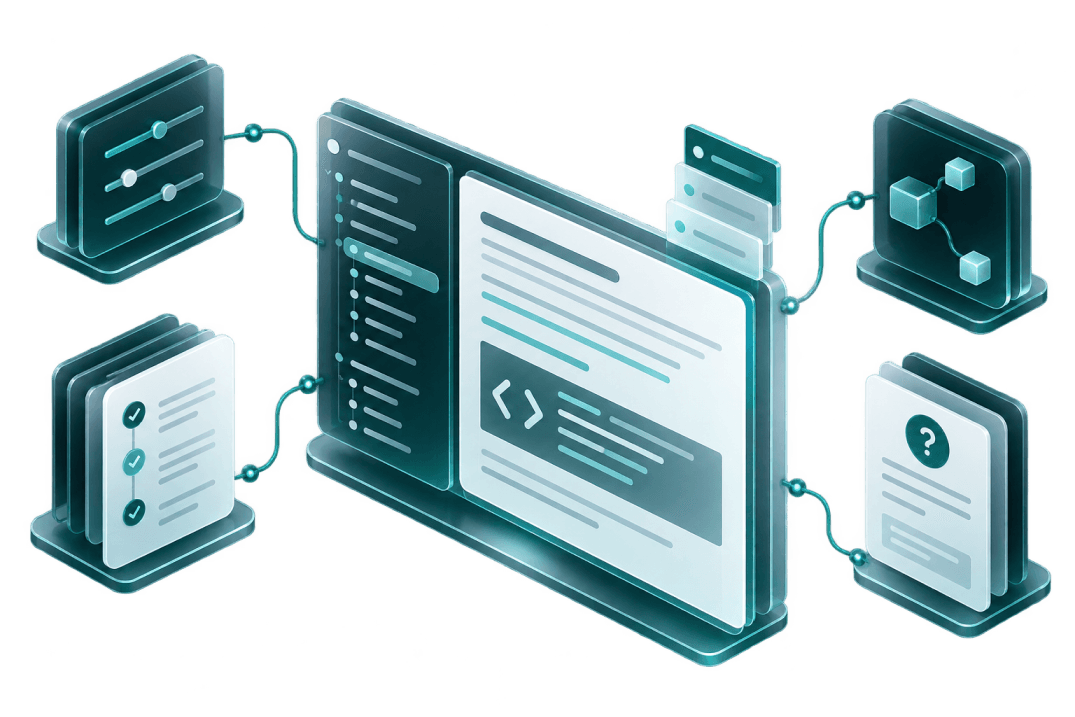
You should not need to know the internal product organization to find the right contract.
Find the approved API, SDK, integration or
event contract for the task.
Illustrative stock photograph

Read prerequisites, current version and the
approved access model.
Illustrative stock photograph

Use released tests, expected states,
observability and authoritative support.
Illustrative stock photograph
A navigation label is not evidence of a released capability.
No approved API, package, integration, authentication or sandbox inventory was supplied for this prototype. No released resource entries or guessed production routes are displayed.
This does not establish that Zoiko has no developer resources. It means current public eligibility cannot be verified here.
Explore the Documentation preview →No approved contract inventory supplied for this prototype.
Contract, canonical route, public state, security review and link health must pass.
Family, actual name, product scope, version/currentness, approved compatibility and owner.
Unknown or private resources remain hidden; no empty placeholder cards imply breadth.
The reference is a contract, not decoration.

Methods, paths, parameters, schema and result/state meanings only
from the current approved contract.
Illustrative stock photograph

Public remediation, retries, pagination, idempotency, limits and
availability only when sourced.
Illustrative stock photograph
Supported package facts come from technical authority.
Actual language/runtime, official package source, version and
supported API/product scope.
Tested official commands, approved auth, migration/
deprecation and real support boundaries.
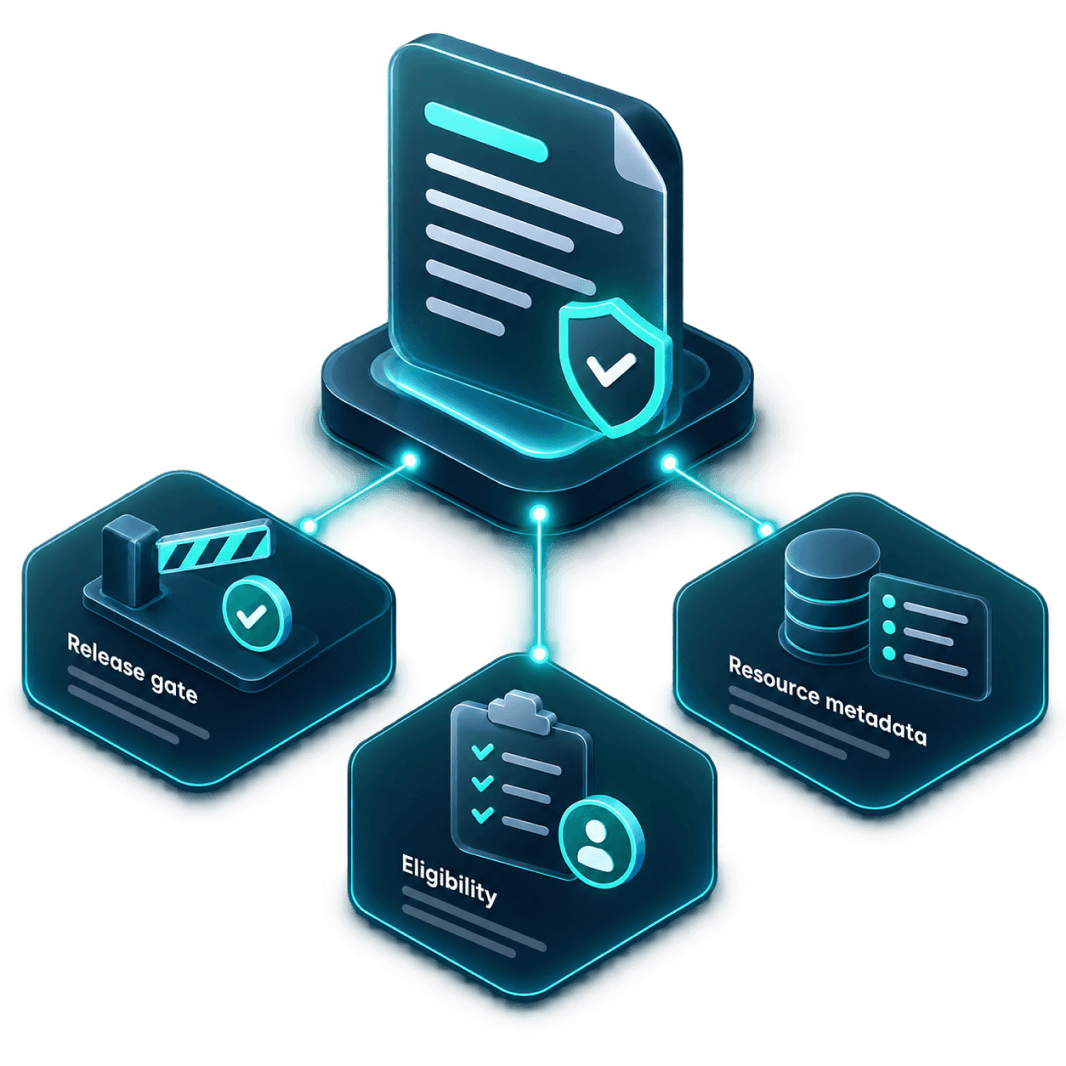
Receipt is not final business completion.

Prerequisites, data-flow authority, setup, expected state, failure
ownership and support.
Illustrative stock photograph

Actual names/schema and sourced delivery, acknowledgment,
ordering, retry and duplicate-handling semantics.
Illustrative stock photograph
Technical compatibility does not imply endorsement or partnership. Names/logos require rights.
Only the approved mechanism; no generic OAuth or HMAC claim.
No protocol or credential flow is assumed.
Published auth method, issuance workflow, exact scopes and
documented
service/delegated identity.
No real tokens, private credentials or sensitive payloads in examples,
URLs,
analytics or forms.
Accelerators require an operable public release.

Released interface, approved auth, current version, expected result
and
cleanup/recovery.
Illustrative stock photograph

External access actually live; maintained source, production
differences and
support scope documented.
Illustrative stock photograph
Eight stages keep contract, version and operational context connected.
Find an approved public
contract.
Verify version, fit, availability
and prerequisites.
Use the actual supported
identity path.
Implement against the
authoritative contract.
Test results, errors, states and
ownership.
Use approved public signals
and Status.
Handle failures through
defined owners.
Review changes and test
migration.
No invented version scheme or release cadence.
Technical authority distinguishes current, recommended and supported versions.
Approved timing, affected contract and migration/replacement or governed tombstone.
Version relationships must be explicit; release changes invalidate stale snippets.
Public disclosure requires applicable Trust/Security approval.
Operational truth remains in its authoritative surface.
Only published units, allowances, observable identifiers and
supported logs/metrics.
Authoritative live health and incident route. No static uptime, latency
or "operational" claims.

Developer convenience cannot expose credentials or customer information.
Synthetic, non-sensitive examples only. No real account identifiers, screenshots or private topology.
Exclude code, payloads, raw errors, tokens and credentials from public analytics.
Security findings use approved Responsible Disclosure routes; no public support-comment substitute.
Ground answers in current public contract versions; do not encourage secret ingestion.

Knowledge, technical contracts and platform identity stay distinct.
Product concepts, workflows, tasks and
approved how-to guidance.
Released API, SDK, integration and
developer- tool contracts.
Separate Technology destination,
exposed only when public-ready.

Self-service first; support for unresolved technical needs; sales for commercial evaluation.
Resource, product/platform, version and public-safe error/task context; no private payloads.
Capability, availability and contract questions after useful resource context.
Channels, response time, SLA and self-service provisioning require approved source records.
Fail closed for private, stale and unsupported contracts.
Honest availability explanation, without fake resources or coming-soon endpoints.
Current replacement or governed tombstone, with lifecycle scope.
Keep governed browse available when possible; explain recovery and preserve focus.
Core public resource content and canonical links remain readable when actual records exist.
Release, compatibility and contract ownership come first.

Continue based on resource state and your developer intent.
No resource identifier or technical contract is passed because an approved public inventory was not supplied. This local inquiry is not a support ticket.
Documentation preview →Do not submit tokens, passwords, source code, production payloads, private hostnames or customer information.