


Research workflows
Connect sources, analysis, review, outputs and evidence.
Zoiko Tech supports education and research organizations with professional
intelligence, research-oriented technology, governed AI, collaboration and
developer foundations — designed to keep provenance, access, exploratory state
and institutional authority visible.
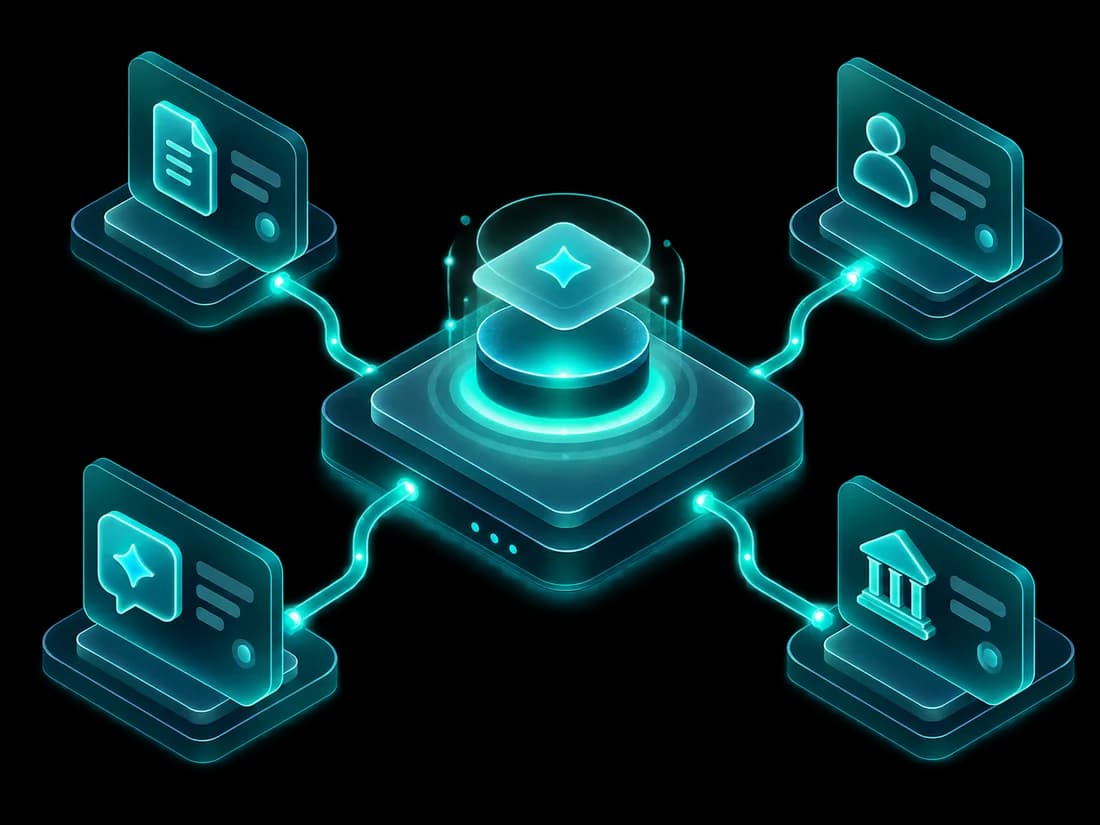
 Governed intelligenceSource-aware · Human-reviewed
 Authoritative sourcesVersion · Rights · Citation
 Human reviewAcademic / research authority
 Collaboration & outputApproved sharing boundary
 Evidence & stateExploratory ≠ Published
IDENTITY / ACCESS · PROVENANCE · INTEGRATION
Six needs frame a focused architecture conversation. Photography is illustrative; no institutional partnership
is implied.
Connect sources, analysis, review, outputs and evidence.


Source-aware assistance with visible provenance and human judgment.


Connect content, identity and experiences to institutional systems.


Explicit access, rights and project boundaries.


Approved research outputs with clear version, state and evidence.


Documented interfaces, identity, events and observability.
Four recurring problems shape the operating architecture.
Conclusions become separated from source version, citation, rights and review.
Generated summaries can be mistaken for validated research or educational truth.
Identity, content, communications and institutional systems need supported handoffs.

Restricted sources and unpublished work require explicit access and sharing rules.

Seven layers preserve source, rights and institutional authority.
Research question, project or learning objective.
What is the work trying to achieve?Publication, dataset, benchmark, content or institutional system.
What is authoritative?Role, project scope and permitted source use.
Who may access and use it?Search, summarize, compare or prepare at supported scope.
How is technology assisting?Authorized people validate interpretation and output.
Who owns the judgment?Approved sharing, technical output or learning experience.
How is it shared?Citations, history, states and documented interfaces.
Can it be reviewed?Missing, restricted, conflicting and superseded sources remain visible.
Author or owner, canonical source, version, date and review state.
Public, internal, partner-restricted or unavailable.
Clearly labeled and traced to the authorized source set.
An operating pattern for knowledge work, with clear ownership and next steps.

ER-101 · Source set incomplete · AI involvement:
None
Owner: Knowledge analyst
Next step: Confirm authorized sources and versions

ER-102 · Under review · AI involvement: Prepare
Owner: Researcher
Next step: Review citations, limitations and interpretation

ER-103 · Approval pending · AI involvement:
Assist
Owner: Authorized reviewer
Next step: Confirm release decision and retained evidence
Approved content, identity and communications can support learning-oriented experiences. Existing
academic systems retain their responsibilities.
Define the audience and approved source material.
Connect supported institutional access architecture.
Retrieval, explanation and collaboration only at supported scope.

LMS, SIS, admissions, assessment and credential systems remain authoritative external systems.
Make source sets, AI contribution, limitations and review authority visible.
Retrieve, summarize, explain or organize authorized sources.
Suggest source or comparison paths; a researcher or educator decides.

Draft notes or material for human review before institutional use.

Approved low-risk technical actions; no self-authorizing publication or academic decisions.
Evidence, scope and limitations; internal benchmarks are not independent validation.
Preserve citation, authorship, institutional policy and accountable review.
University and external collaboration require approved participants, rights and publication rules.
Internal, university and guest roles with accountable project ownership.
Dataset, source and output restrictions remain explicit.
Record material access, approval and release events where policy permits.
Zoiko Research is described through research, publications, benchmarks, technical papers and university collaboration.
Approved title, authors, date, abstract, canonical source, state and rights.
Published method, scope, conditions, version and limitations.
Team, topic, version and approved public technical reference.
Preliminary findings and work in progress stay clearly labeled.

Education under Frontier Technologies remains research or exploration unless formally graduated.
Hypothesis or prototype; no commercial availability implication.
Current work with scope, owner and public-approved limitations.

Testing and review underway; no launch promise.
Requires formal product governance, approved claims and support readiness.
Preserve historical context and current-version references.
Govern sensitive and restricted material at project and institution boundaries.

Use data only for the approved research or learning purpose.

Expose only necessary information for the workflow and role.

Explicit handling for participant, student-adjacent and unpublished information.

Visible permitted use for sources, datasets and outputs.

Role, project, institution and partner scope.

Approved rules and authoritative security evidence; no generic compliance promise.
Research artifacts, exploratory programs and technology products retain distinct states.
Research, publications, benchmarks, technical papers and university collaboration. Approved content only.
Shared governed agentic intelligence foundation; education-specific capability requires evidence.

Build state. Public developer surfaces and capabilities depend on readiness and approval.
Governed business communications for approved collaboration scenarios.
ZoikoLogia, Kriton and Massarius architecture where public-approved; sector roles need source support.
Exploratory research lane; no generally available education product claim.
Institutional identity, content, research and collaboration integrations require current technical evidence.
Approved APIs, SDKs, model interfaces, events and authentication.
Documentation, API references, quickstarts and architecture guides.
Sandbox and sample implementations only when external access is live.
Supported observability, status, changelog and developer support.

Seven stages connect architecture decisions to practical adoption.
Research or learning objective, people and human authority.
Gate: Scope approvedContent, data, artifacts, identity and institutional systems.
Gate: Architecture map approvedRights, privacy, AI, citation, retention and review.
Gate: Governance approvedDraft, exploratory, reviewed, approved, published and superseded.
Gate: State model approvedMissing or conflicting sources, restricted access and insufficient evidence.
Gate: Acceptance criteria metOne bounded workflow with controlled, approved data.
Gate: Pilot reviewedAdd scope when rights, state and support readiness are approved.
Gate: Expansion approvedInstitutional case studies and measured results were not supplied. Explore the architecture while evidence
is pending.
Sources → provenance → human review → approved operating result. Evidence pending.
Objective → access and workspace design → approved public output. Evidence pending.
Experience → institutional integration → reviewed operational result. Evidence pending.
Technical workflow → API and data architecture → approved result. Evidence pending.
Publish identity, research scope and outcomes only with explicit approval.
Approved attribution and partnership scope.
Actual public-approved project and integration detail.
Reviewed technical or operational evidence with limitations.
Adjacent foundations follow the objective and readiness of the work.
Zoiko Research and technical implementation context.
Governed assistance, evaluation and Responsible AI.
Modernization and cloud / developer foundations.
Communications with privacy and restricted-work boundaries.
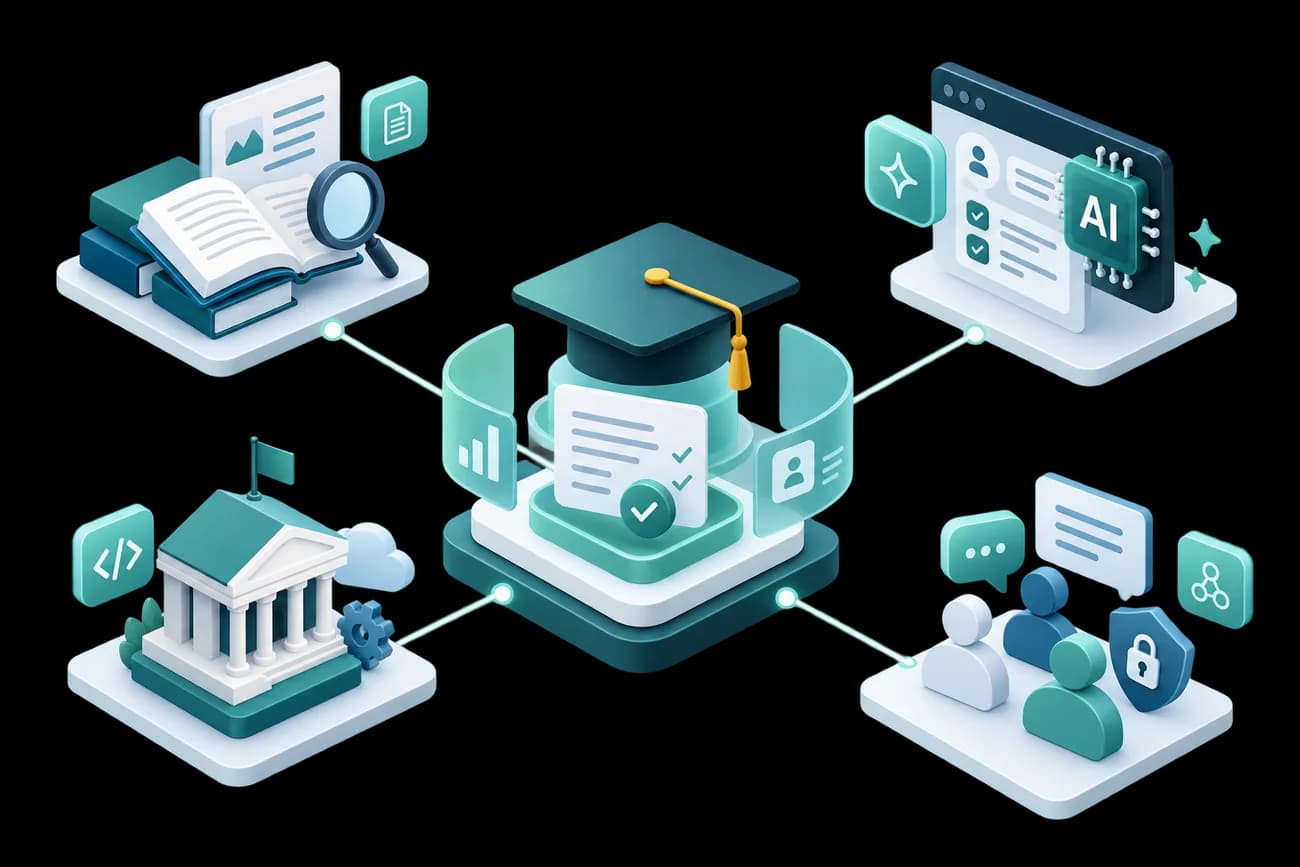
Scope, authority and research maturity guide the conversation.


Talk with Zoiko Tech about the workflow, sources, institutional systems and governance boundaries
involved.